

Why Clear Expectations Matter in Live-In Care
Live-in caregiving is different from most other types of work.
A live-in caregiver not only provides daily assistance to the older adult but also resides in the same home. Because of this close living and working arrangement, it is essential to establish trust, maintain open communication, and demonstrate mutual respect from the outset.
Misunderstandings become bigger problems when expectations are not clear. Having an open dialogue about our daily tasks, work hours, alone time, and household routines is better than assuming things.
When everyone understands their roles, caregiving is more comfortable for both the caregiver and the senior.
LiveIn Helper recommends that families and caregivers talk openly before each placement so they can begin their relationship with confidence.
Why a Written Care Agreement Is Important
You may not always need a formal legal contract, but having a written agreement for live-in caregiving is still a smart idea. For example, if a caregiver is expected to provide meal preparation and medication reminders, clearly documenting these responsibilities in writing can help avoid confusion or disputes later. Remember, legal rules for live-in caregivers may vary by location. To make sure your agreement is valid, consider talking to an attorney or using a trusted template for your area.
A written agreement helps by clearly listing everyone’s duties and obligations.
It operates as a useful reference if questions come up later and helps prevent confusion.
Families and caregivers should review the agreement together before starting to make sure everyone understands and agrees with what’s in it. Using a checklist or sample agreement can make this process easier. These tools give you a clear starting point, guide your conversations, and help everyone know what to include.
LiveIn Helper believes that clear communication from the start leads to stronger, longer-lasting caregiving relationships.
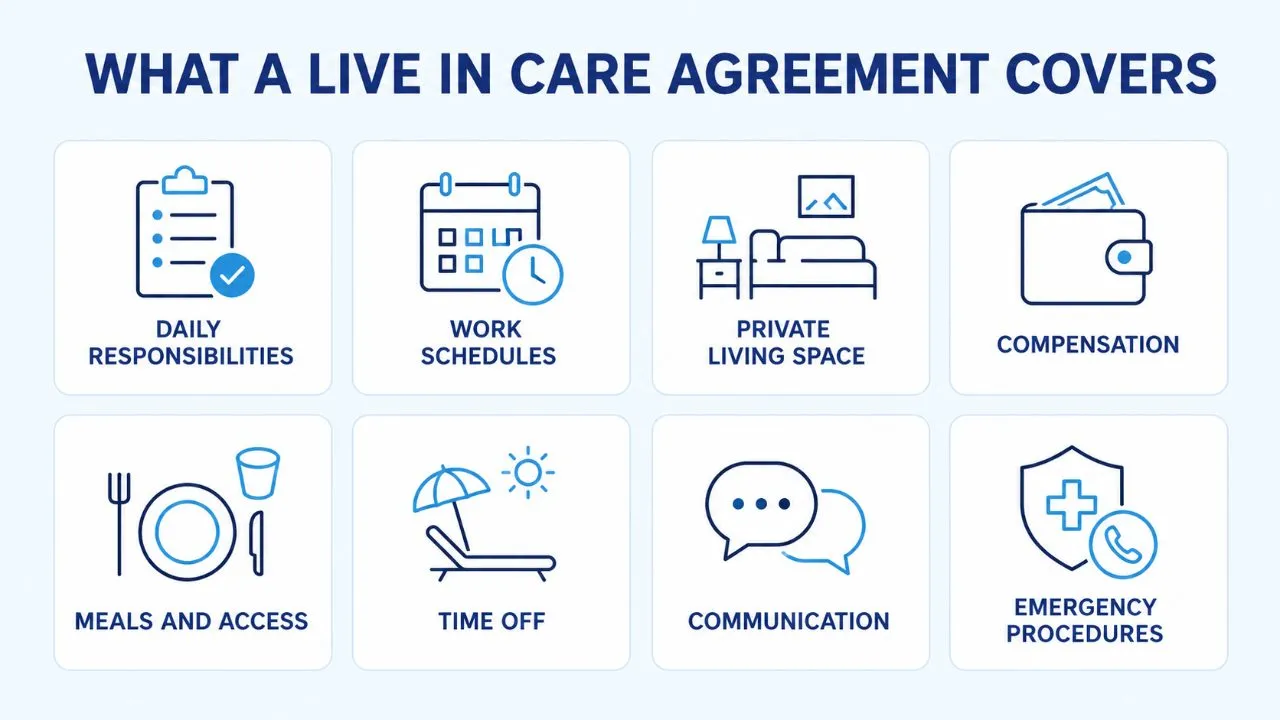
What Should a Live-In Caregiver Agreement Include?
Every caregiving arrangement is unique, but most agreements cover similar topics. Common areas include:
- daily responsibilities,
- work schedules,
- private living accommodations,
- compensation,
- meals and household access,
- time off,
- communication expectations,
- and emergency procedures.
The agreement should fit the senior’s needs and make sure the caregiver comprehends their role clearly.
It’s also helpful to update the agreement if care needs change over time.
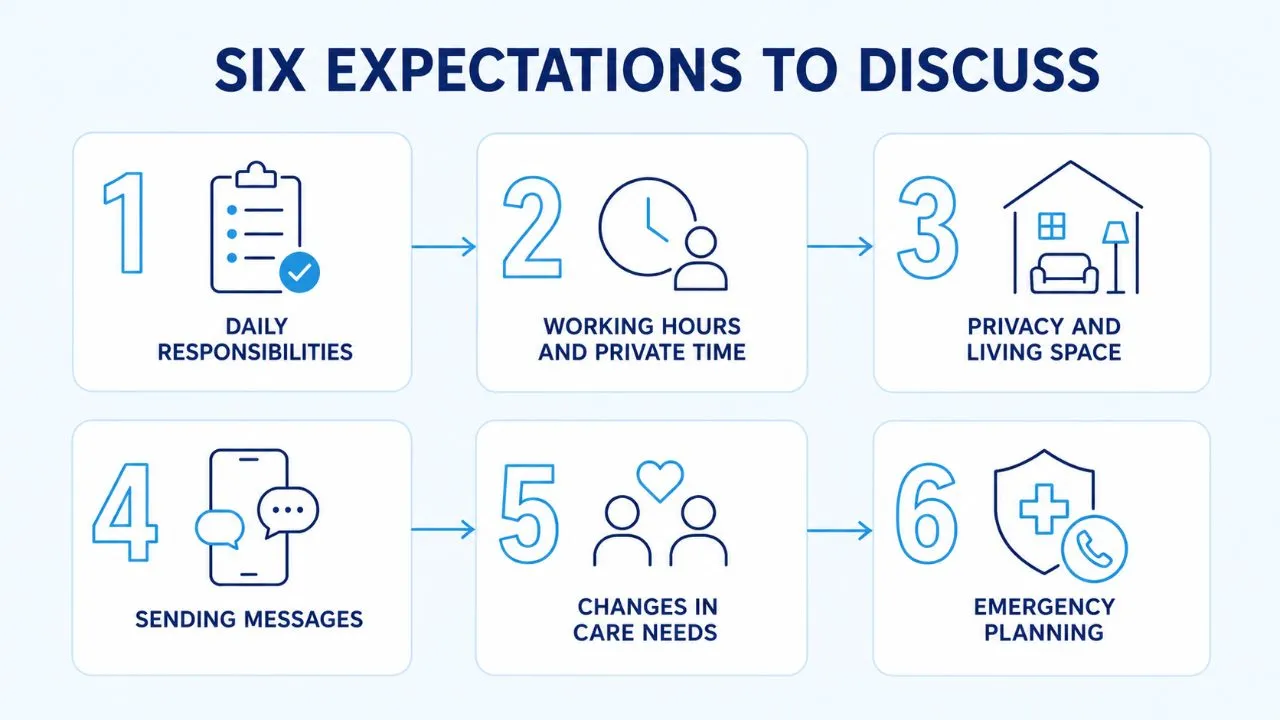
6 Expectations Families and Caregivers Should Discuss
1. Daily Responsibilities
Families should clearly explain what tasks they expect the caregiver to do.
Services may include companionship, making meals, transportation, medication reminders, light housework, or assistance with daily routines.
Clarifying responsibilities is important because it provides families and caregivers with a shared understanding that will lessen unrealistic expectations. Having clear knowledge of roles reduces uncertainty. When each party knows what to look out for, they can all prepare appropriately for their obligations, making the care arrangement more effective.
2. Working Hours and Private Time
Even though live-in caregivers live in the home, they aren’t expected to work all the time.
Every arrangement should include fair schedules, regular breaks, and individual time.
Respecting these boundaries can help reduce burnout and create a healthier relationship.
3. Privacy and Space for Living
Both the caregivers and the elder need privacy.
Families must discuss the following:
- private sleeping arrangements,
- shared home spaces,
- Visitor guidelines,
- as well as separate boundaries.
When you give each other some space, we help make this house a home.
4. Sending Messages
Having regular conversations helps catch problems early.
Families and caregivers should decide how to give updates and who to contact if something unexpected happens.
Frank conversations build trust.
5. Changes in Care Needs
A senior’s needs could change over time.
Discussing how to handle new responsibilities helps everyone adjust more easily if extra support is needed.
6. Emergency Planning
Every caregiver should know what to do in a medical emergency or if something unexpected happens.
Families should provide emergency contacts, healthcare details, and explicit instructions so caregivers feel prepared if pressing decisions are needed.
LiveIn Helper suggests that caregivers and families review emergency procedures as part of every placement.
Best Practices for Building a Strong Caregiving Relationship
The best live-in caregiving arrangements are grounded in mutual respect, not just strict rules.
Caregivers should feel comfortable asking questions if they are unsure about their responsibilities.
Families should give regular feedback and acknowledge the caregiver’s efforts and contributions.
Simple habits such as demonstrating appreciation, listening, and being honest help create a positive home environment.
When both sides are flexible and understanding, trust develops naturally over time.
LiveIn Helper supports this relationship-focused approach by matching caregivers and seniors whose personalities and lifestyles are a good fit.
Common Challenges and How to Prevent Them
Even with proper planning, caregiving arrangements can encounter challenges from time to time.
Miscommunication, changing care needs, or different expectations can cause stress if they are not addressed early.
The best way to avoid these problems is to talk regularly and be open to making changes when needed.
Reviewing responsibilities together every few months helps ensure the arrangement still works for everyone.
LiveIn Helper encourages candid communication and thoughtful planning to help caregivers and families build strong, stable partnerships grounded in trust and understanding.
Expert Insight: Communication is the Foundation of Great Care
The best live-in caregiving relationships rely on good communication, not assumptions.
Even experienced caregivers cannot meet expectations that have not been discussed.
Families also benefit from understanding the caregiver’s point of view, boundaries, and daily routine.
Regular meetings provide both you and your caregiver with opportunities to address questions, remark upon success, and adjust responsibilities if needs change.
Regular communication establishes trust and helps avoid misunderstandings that decrease positivity at home.
LiveIn Helper supports relationship-focused caregiving by helping families and caregivers set explicit expectations from the beginning.
Reviewing Care Arrangements Over Time
A caregiving agreement should not stay the same forever.
As older adults age, their physical, emotional, or social needs may change.
Responsibilities that worked at first might need to be updated over time.
Families and caregivers should frequently review expectations and discuss any changes before adding new responsibilities.
Being proactive helps prevent confusion and ensures the senior continues to get the right support.
LiveIn Helper believes that flexibility is vital to long-term caregiving success and promotes open conversations during every placement.
Common Mistakes to Avoid
Careful planning can help prevent many caregiving challenges.
Some of the most common mistakes include:
- assuming responsibilities without discussing them,
- failing to define working hours,
- overlooking the caregiver’s need for personal time,
- delaying important conversations when problems emerge,
- and neglecting to review expectations as care needs change.
Dealing with these matters early helps create a healthier, more encouraging environment for everyone.
Working with an organization like LiveIn Helper can make these conversations easier and help guide you through the caregiving journey.
How LiveIn Helper Supports Successful Caregiving Relationships
Finding the right caregiver is only one part of building a successful live-in care arrangement.
LiveIn Helper strives to create matches that benefit the senior and help caregivers succeed. To ensure they are qualified and trustworthy, every caregiver undergoes background checks and interviews. Matching seniors with caregivers is a meticulous process. It considers the senior’s care needs, preferences, personality, and lifestyle. It also considers their caregivers’ skills, experience, and communication preferences. LiveIn Helper can introduce pairs who are more likely to create a successful partnership by getting to know families and caregivers. It provides assurance and reliability for all parties involved in the process.
Each placement considers personality, lifestyle, communication preferences, and daily care needs to help build positive, long-term relationships.
LiveIn Helper helps families set realistic expectations and connects them with caring caregivers, encouraging caregiving experiences built on trust, dignity, and respect.
This solution helps seniors stay safe in their own homes and gives caregivers the support they need to do well in their roles.
Key Takeaways for Families and Caregivers
A successful live-in caregiving arrangement requires more than simply practical skills.
It also needs clear communication, realistic expectations, and a readiness to work together as needs change.
To build a strong caregiving relationship, remember to:
- create a written care agreement,
- define responsibilities clearly,
- respect individual limits,
- communicate regularly,
- and review expectations as circumstances change.
Engaging with trusted organizations such as LiveIn Helper can support families and caregivers in starting their relationship with confidence and clarity.
Creating Stronger Caregiving Partnerships with LiveIn Helper
A kind reminder that your partnership matters, and not just a job. When relatives and carers set clear expectations, communicate directly, and work together with respect, older adults benefit from more consistent and caring support.
Through LiveIn Helper, seniors are matched with live-in helpers who enjoy what they do and value personal relationships. Through attentive matching, ongoing communication, and a focus on aging-in-place, LiveIn Helper helps families forge enduring relationships for essential care support.
FAQs About Live-In Caregiver Contracts and Expectations
Should written agreements be available for caregivers?
Definitely, a clearly defined written agreement helps clarify responsibilities, schedules, compensation, living and other arrangements, and expectations, and reduces the chances of misunderstandings.
What responsibilities should a caregiving agreement include?
Most contracts outline the daily caregiving activities, work schedule, time off, private sleeping quarters, communication expectations, and emergencies.
Are live-in caregivers expected to work all day?
No. Although they live in the home, live-in caregivers should have reasonable working hours, scheduled breaks, and private time.
How often must the expectations of a carer be reviewed?
Families and caregivers should examine expectations when the older adult requires additional care or support, and at regular points throughout the caregiving relationship.
How does LiveIn Helper support families and caregivers?
LiveIn Helper precisely matches caregivers with seniors based on compatibility, encouraging good communication and well-defined expectations that support successful long-term caregiving relationships.


